Research for the Real World
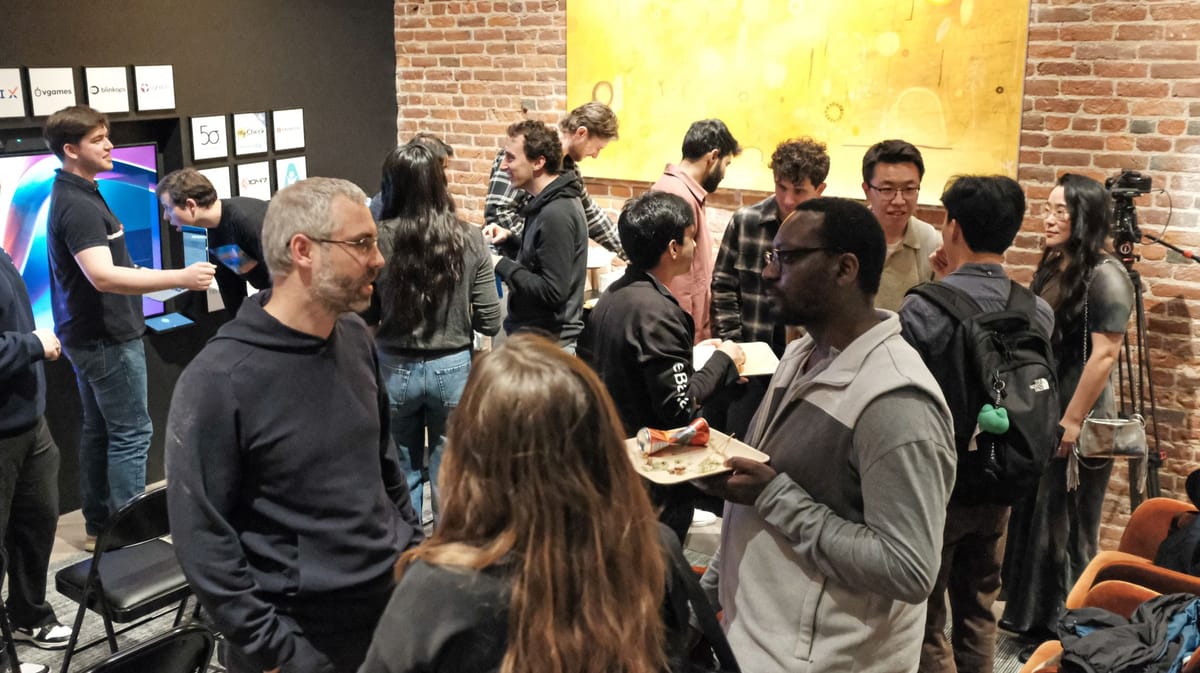
The most interesting AI conversations aren’t happening on X or conference stages.
They’re happening around dinner tables.
Last week, we hosted ~30 AI researchers, engineers, and founders at Axiom for an intimate dinner featuring four researchers working on genuine frontier problems. It was one of those rare times where you could feel the future being built in real time.
A few ideas from the night that people couldn’t stop talking about:
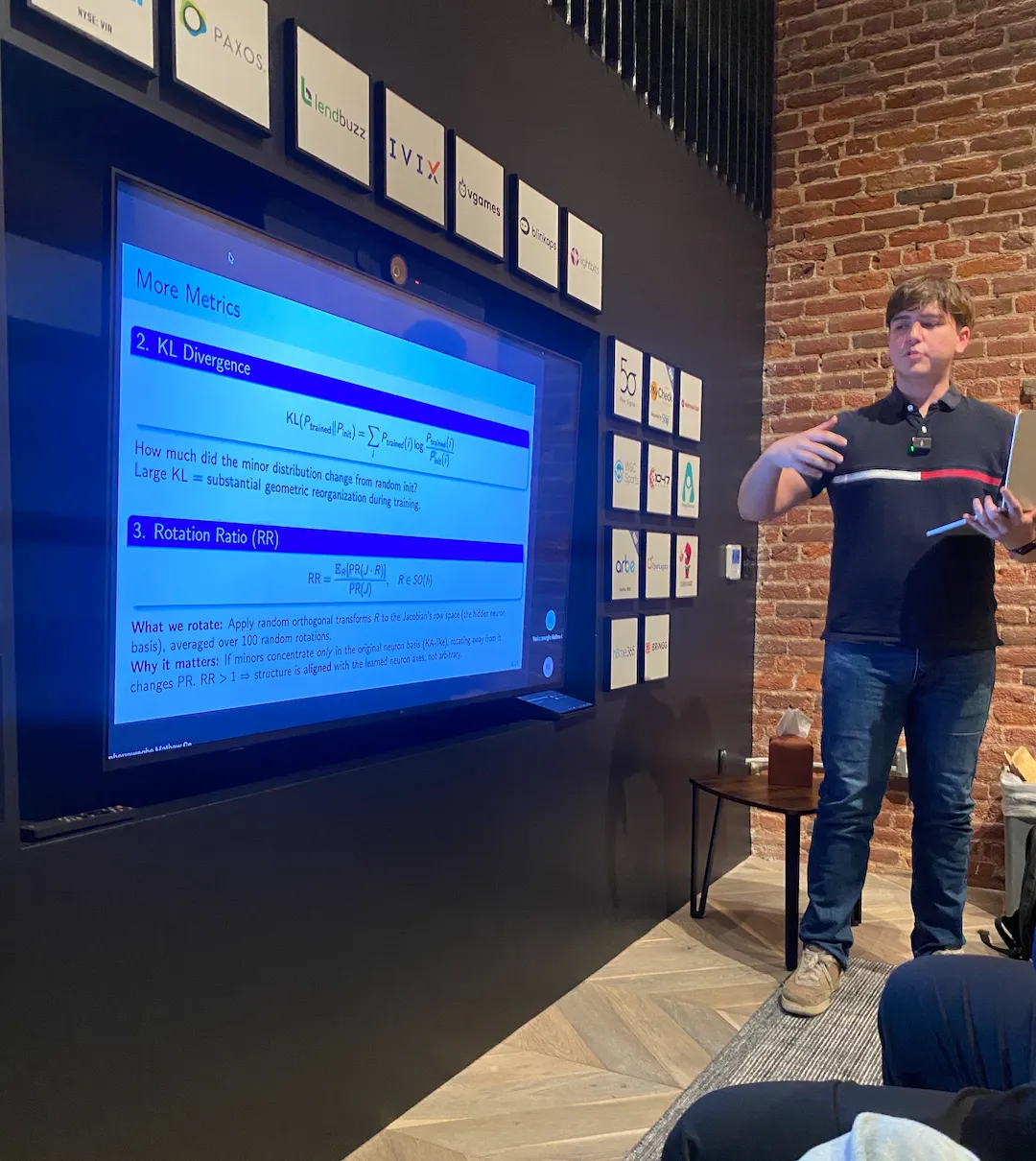
Mathew Vanherreweghe (from Logical Intelligence) walked through breakthroughs in detecting potential model hallucinations through neural network geometric structure, and how to point models away from those paths, before they ever reach users. The room lit up when he showed huge benefits not only in accuracy, but also in data and compute costs!
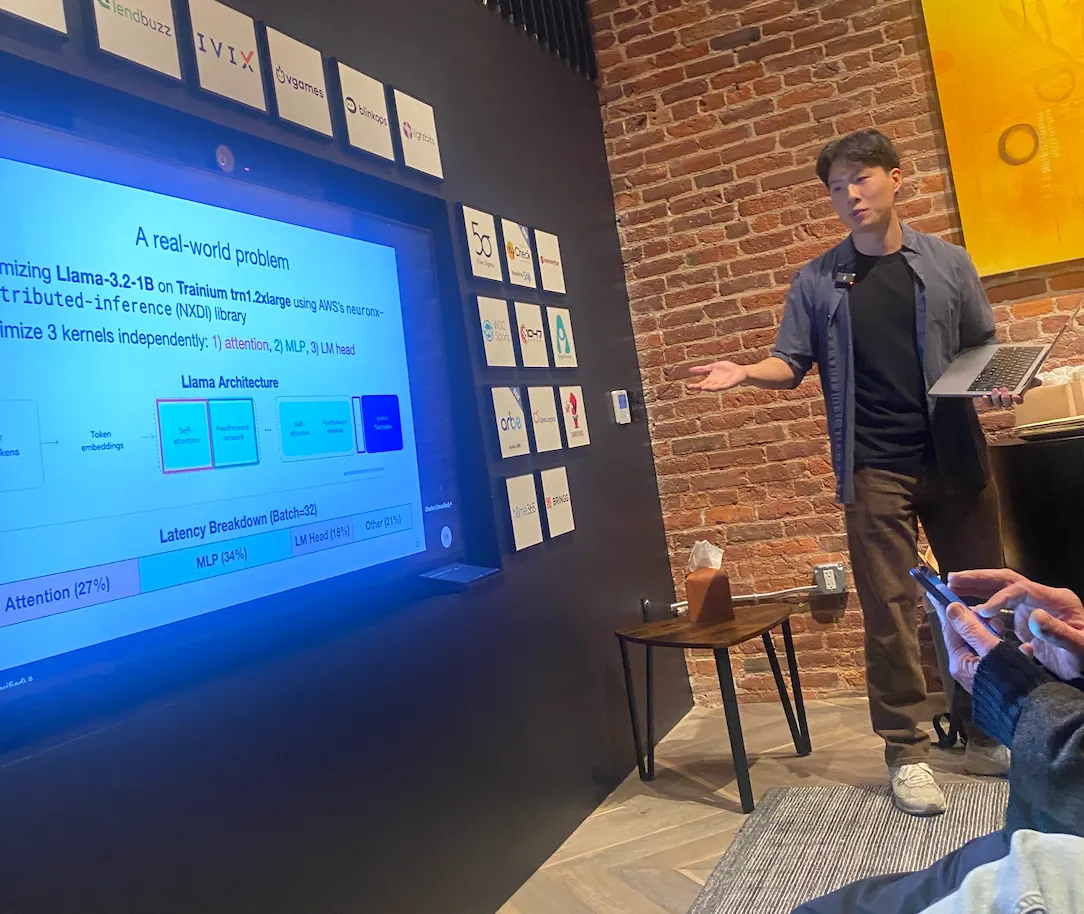
Charles Hong (Ph.D UC Berkeley) shared work that could challenge Nvidia’s vendor lock-in. He demonstrated how LLMs could effectively compile code to different types of hardware quickly and efficiently, enabling developers to write to multiple platforms without special knowledge. Several people stayed after to debate what this means for the future of chip development!
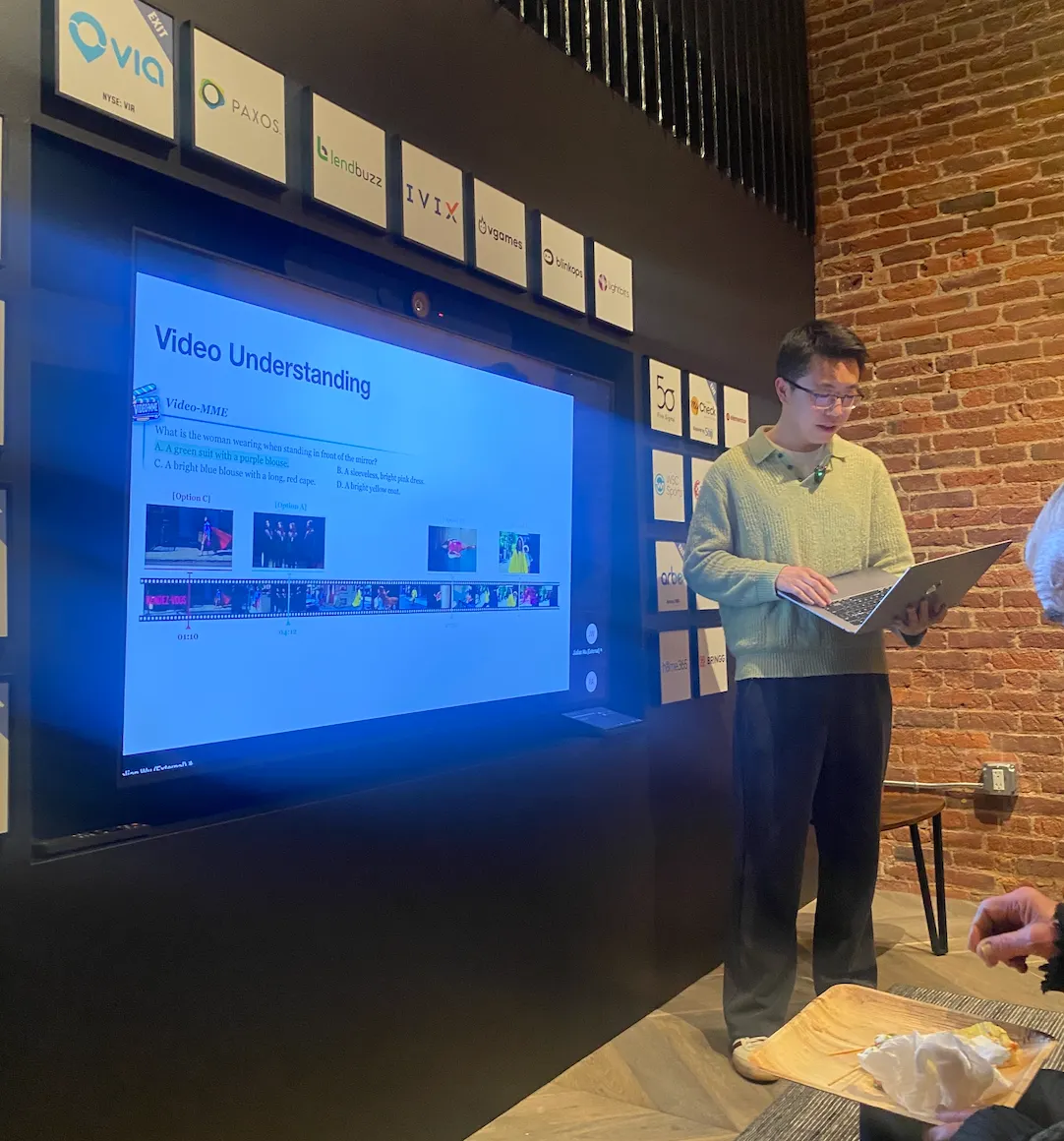
Jialian Wu (Senior Research Scientist, AMD GenAI), presented research that challenges how we think about video processing and search. The frameworks he has built process even hour-long video in a fraction of the time currently required, by employing agents that reason on where specific content could be, and how to answer questions about the content. This enables training and inference at unprecedented scale. One of those genius ideas that seems obvious - once someone has solved it!
Jack Langerman (former Apple research scientist) revealed a counterintuitive result that complex eval metrics often correlate worse with human judgment vs simple alternatives. A wake-up call for anyone building evals - which was like everyone in the room!
But honestly, the best part wasn’t the talks.
It was watching researchers and builders who had never met before sketching ideas on napkins, trying to apply each others’ findings to their own problems, and swapping half-formed startup concepts.
That’s exactly why we started hosting these at Axiom.
AI is moving too fast for knowledge to stay siloed. We believe small, high-trust, high-signal gatherings are where some of the most important collaborations start.
We’re planning more of these.
If you’re working on frontier AI research or building in the space and want to join a future dinner, comment or DM me. What is one AI idea or research direction you think is currently underrated?